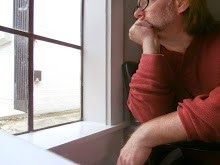
I took on the task of reading and reviewing The Art of Helping Others by Douglas C. Mann. As a writer and performer, I was intrigued by the title and the author description as a working artist.
Up front, I'll say I found it a hard book to get into. In fact, I had to read the first chapters twice, thinking maybe I'd read them too inattentively the first time, but even on the second read, it felt like slogging through. It all felt a little familiar and yet vague. It was Mann's personal story of leaving a music executive job to be an artist/missionary. It's personal history without feeling terribly personal. Yes, there are some stories that are potentially vulnerable, but it all felt as if it were told as if from a distance. It's something I puzzled about as I read it. It seemed a singular achievement, although not the kind you want to repeat.
It was around chapter 5 that things began to cook and the rest of the book was engaging. I'm always aware that my experience may not be someone else's---after all someone has made young vampires in love a bestselling genre and I've no clue why---but if you find the rest of this review to spark your interest, I would say skim the first and head as quickly as possible to the middle.
At the heart of this book, it's not a book about art or art-making, which was a little bit of a disappointment to me, but not much of one. Mann is using his experience as an artist---and the inherent risks involved in following that path---as a template for what he is calling all Christians to be. The term is uses is "creative inciter," a term that is broadly enough defined to make it accessible, I believe, to non-artists (if such exist, but that's another argument to be had).
The notion is that we find creative ways to enter into lives, find unusual ways to reveal grace or call for justice or generally bring in the Reign of God. He talks about this requiring sacrifice and that "dying to self" thing that comes up once in a while among Christians. He even relates an amusing conversation he had with a book executive about how books about "dying to self" just don't sell. He also relates how someone inviting him to "come die with us" was the way he heard the call to leave his lucrative executive job. He makes a decent case for that needing more foregrounding in Christianity, how that can be a compelling invitation for some people.
There is a section where he tries to make a case for asking "why not?" rather than "what if?" Mann seems to find some profound difference between the two questions that I didn't grasp. He found one more motivational, whereas I find them to be about equally so.
I do like that at the end of the book, he gives us a few paragraphs about different organizations that he sees as creative inciters. I will refer to those, as I'm always looking for networks to plug into (which I find difficult as a gay, Christian, creative type). I've only visited a couple of sites so far, but will explore further.
It's clear Mann has a great concern for others and has put that into practice, through his art and through his other lifestyle choices. That, at the very least, is admirable.
In the end, I do find it hard to give The Art of Helping Others more than a lukewarm review. It could be boiled down to a really good article, but perhaps the pieces that didn't engage me might be fascinating to others. If you're intrigued enough to give it a try, there is a sample of the audio Book on Noise Trade. I would at least recommend giving that a try.
Meanwhile, I'm going to be watching Mann's website for a bit. I think he's on to something. I'm not sure this book is the best he has to offer. As a choir director use to prod us, "that was so good, it should be better." I'm hoping Mann eventually gives us the "better."
-----------------
Legal stuff:
Disclosure of Material Connection: I received this book free from
the author and/or publisher through the Speakeasy blogging book review
network. I was not required to write a positive review. The opinions I
have expressed are my own. I am disclosing this in accordance with the
Federal Trade Commission’s 16 CFR,Part 255.
#SpeakeasyArtofHelping
Wednesday, May 7, 2014

Sunday, April 20, 2014
Resurrection 2014

We teach that all that pain and darkness can be redeemed.
At least, at our best, that's what we teach.
It was not, in the end, "all good." It was not merely that we couldn't see the big picture, that we couldn't see the plan, didn't have enough faith. This horrific, cruel, bloody death was real and worthy of grief.
But this "all bad," in the end, does not stay in lament.
Child of God, every dark thing, every hurtful thing, every grief-making event of your life is not an illusion. If you're paying attention, you know it's not "just a bad day" that we ironically call "good."
But, Child of God, holy Image of God, what I would tell you is that within the community of the beloved, in closed rooms and broken bread, the possibility, even the promise, of redemption may be revealed. When it is, it will be surprising and it will not seem nearly as real as the suffering, but it will be there and it will bind up your wounds and open your mouth with the sweetest Alleluia!
Resurrection will catch you, astound you, and you will not be lost.
Christ is risen!
Christ is risen indeed! Alleluia!
Saturday, April 19, 2014

Friday, April 18, 2014
Just Another State Execution
What else do you say?
Jesus wasn't the first or the last person to die on the cross. It was a Roman Empire way of dying. It was a non-citizen way of dying.
Religious and secular power had a part in his execution---but he's hardly the first or last to lay claim to that combination, either.
At Passover, a child asks: "why is this night different from all other nights?"
We Christians might ask: "why is this execution different from all the other executions?"
We'd do well to remember that it isn't, that any execution is a sad, painful, shameful way to die.
Can God redeem even this?
Jesus wasn't the first or the last person to die on the cross. It was a Roman Empire way of dying. It was a non-citizen way of dying.
Religious and secular power had a part in his execution---but he's hardly the first or last to lay claim to that combination, either.
At Passover, a child asks: "why is this night different from all other nights?"
We Christians might ask: "why is this execution different from all the other executions?"
We'd do well to remember that it isn't, that any execution is a sad, painful, shameful way to die.
Can God redeem even this?
+ + +
I would invite you to click here for a story about an art piece that I find appropriate for entering the scandal of the cross.
Thursday, April 17, 2014
Commandment
Something about friends and ritual and prayers and thanksgiving. Bread and wine and dirty feet washed clean by your master, your servant. Something about humility and betrayal and the order of things.
Something about loving like Jesus the night before he dies.
Something about loving like Jesus the night before he dies.
Wednesday, April 16, 2014
in.just.ice
I just got out of a lecture by Doran Larson, a professor at Hamilton College (the lecture was at the University of Houston-Downtwon). He is promoting a new initiative, the American Prison Writing Archive. He has edited and published a book of prison writings, Fourth City: Essays from the Prison in America.
I purchased his book afterward and so I have no idea what I have in my hands now. He said the writings are a chronicle of life inside the largest prison system in the world, a system that has a population larger than Houston, the fourth largest city in the United States (hence the title of the book). This is not a book about innocence, but about human suffering. It is also, as he said, a chance for prisoners to be seen as something other than their crime.
It's a true and terrible thing that we tend to define people by the worse thing they ever did.
Believing in grace, I need these stories to remind me of the humanity behind every awful action we're capable of perpetrating. Perhaps you do, too.
The online archive is a site for the essays that couldn't fit in the book. As it's brand new, they're hoping for volunteers from across the nation to help transcribe the scanned essays, so the essays are searchable. Not that I need one more thing to do, but I hope I'll be able to help do at least a handful of essays. If you're interested, you might want to contact Dr. Larson, which you can do from the American Prison Writing Archive site.
This being Holy Week, of course, I flashed upon the arrest of Jesus---although sadly his incarceration was too brief for him to take up pen and write anything. But Paul did, when he was incarcerated. There are others. Last century saw some significant writings from the incarcerated Dietrich Bonhoeffer and Martin Luther King, Jr. There is a grand tradition among Christians (and other relgions) for writing from prison.
Of course, we tend to think of all those men as innocent. Again, this book is not a book of innocence, but of suffering. The American prison industry is huge, larger than any other nation on earth, much larger than other nations we tend to think of as being under a police state.
And we treat our prisoners poorly. The other reason Dr. Larson named this book Fourth City is because he said there was, across the nation, a similar culture exposed in each letter, a language with it's own idioms, an internal logic for how to move through the culture. Our prison system is, for all intents and purposes, the ultimate urban sprawl, spread sea to shining sea, a city of corruption and violence.
Did you know prison officers have a lie expectency of 59 years? They die young not from violence, but from hypertension and related disease. It's not only the prisoners who suffer.
It seemed fitting to hear this lecture on the Wednesday of Holy Week. It seemed fitting I pass a tiny bit of it on to you.
I purchased his book afterward and so I have no idea what I have in my hands now. He said the writings are a chronicle of life inside the largest prison system in the world, a system that has a population larger than Houston, the fourth largest city in the United States (hence the title of the book). This is not a book about innocence, but about human suffering. It is also, as he said, a chance for prisoners to be seen as something other than their crime.
It's a true and terrible thing that we tend to define people by the worse thing they ever did.
Believing in grace, I need these stories to remind me of the humanity behind every awful action we're capable of perpetrating. Perhaps you do, too.
The online archive is a site for the essays that couldn't fit in the book. As it's brand new, they're hoping for volunteers from across the nation to help transcribe the scanned essays, so the essays are searchable. Not that I need one more thing to do, but I hope I'll be able to help do at least a handful of essays. If you're interested, you might want to contact Dr. Larson, which you can do from the American Prison Writing Archive site.
This being Holy Week, of course, I flashed upon the arrest of Jesus---although sadly his incarceration was too brief for him to take up pen and write anything. But Paul did, when he was incarcerated. There are others. Last century saw some significant writings from the incarcerated Dietrich Bonhoeffer and Martin Luther King, Jr. There is a grand tradition among Christians (and other relgions) for writing from prison.
Of course, we tend to think of all those men as innocent. Again, this book is not a book of innocence, but of suffering. The American prison industry is huge, larger than any other nation on earth, much larger than other nations we tend to think of as being under a police state.
And we treat our prisoners poorly. The other reason Dr. Larson named this book Fourth City is because he said there was, across the nation, a similar culture exposed in each letter, a language with it's own idioms, an internal logic for how to move through the culture. Our prison system is, for all intents and purposes, the ultimate urban sprawl, spread sea to shining sea, a city of corruption and violence.
Did you know prison officers have a lie expectency of 59 years? They die young not from violence, but from hypertension and related disease. It's not only the prisoners who suffer.
It seemed fitting to hear this lecture on the Wednesday of Holy Week. It seemed fitting I pass a tiny bit of it on to you.
Tuesday, April 15, 2014
Breaking Into the Cycle
Jesus asks us to turn around, turn away from the patterns of the powers that be. It feels like it gets harder to do. We live in a world where it's increasinly hard to buy a shirt or shoes and know for certain that no one was exploited in the transaction. Slavery is alive and well, whether as domestic workers held hostage for lack of citizenship or sex workers shuttled about to gratify anyone with the cash and the urges no one taught them to control. We eat what we want and what we want is often junk.
And we enter these scenes, wearing the work of corporations-who-are-people, thinking we're free, thinking . . . someone has to do the dirty work . . .
This is the cycle and pattern and web of our sin.
Speaking out against these powers are what got Jesus killed. I'm certain of it. And those of use who have never been so much as threatened . . . perhaps we're complicit . . .
Subscribe to:
Posts (Atom)